Voices Left Behind
- photographs
- video
- journals
- objects
- in collaboration with Nuclear Princeton
2025
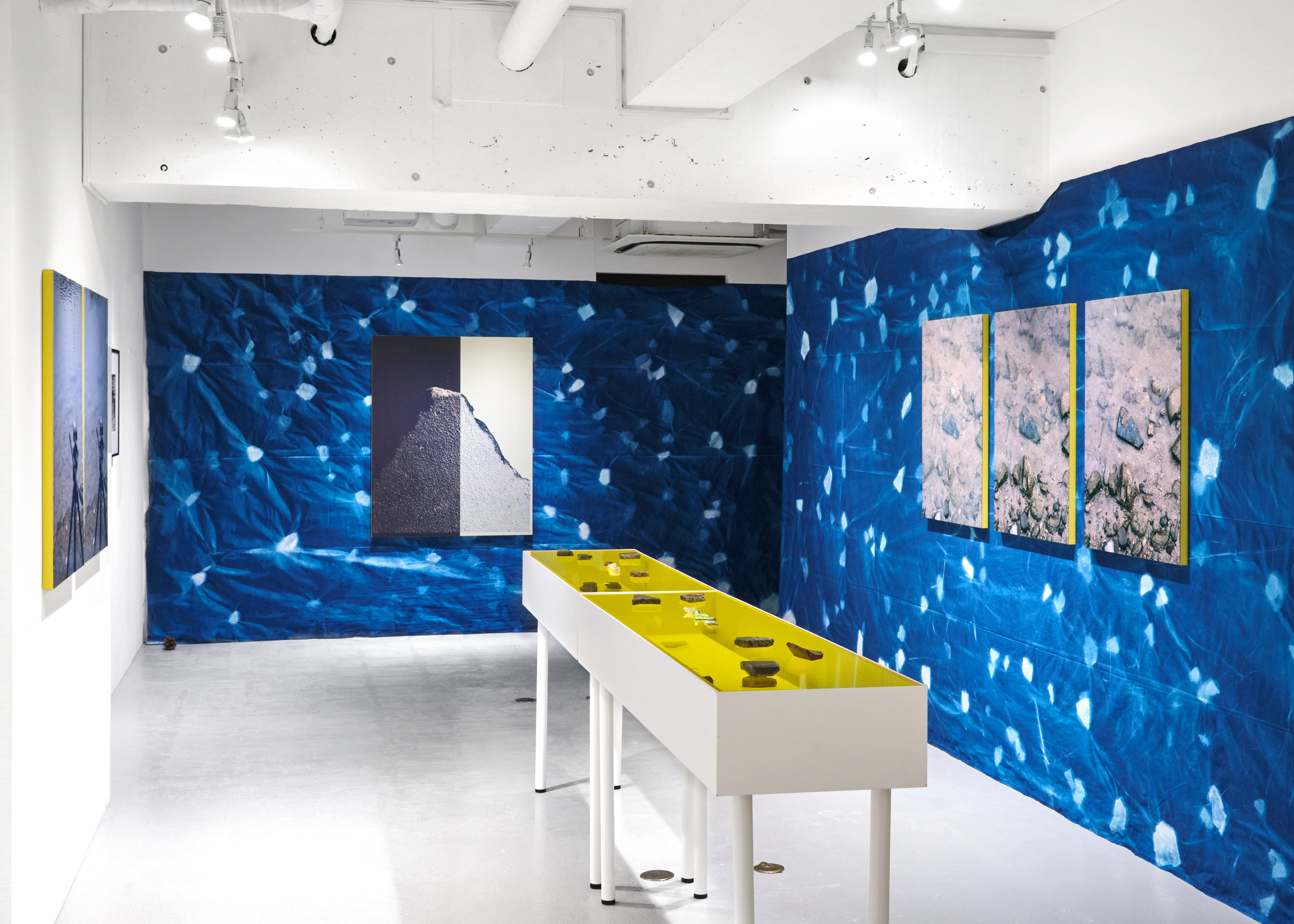
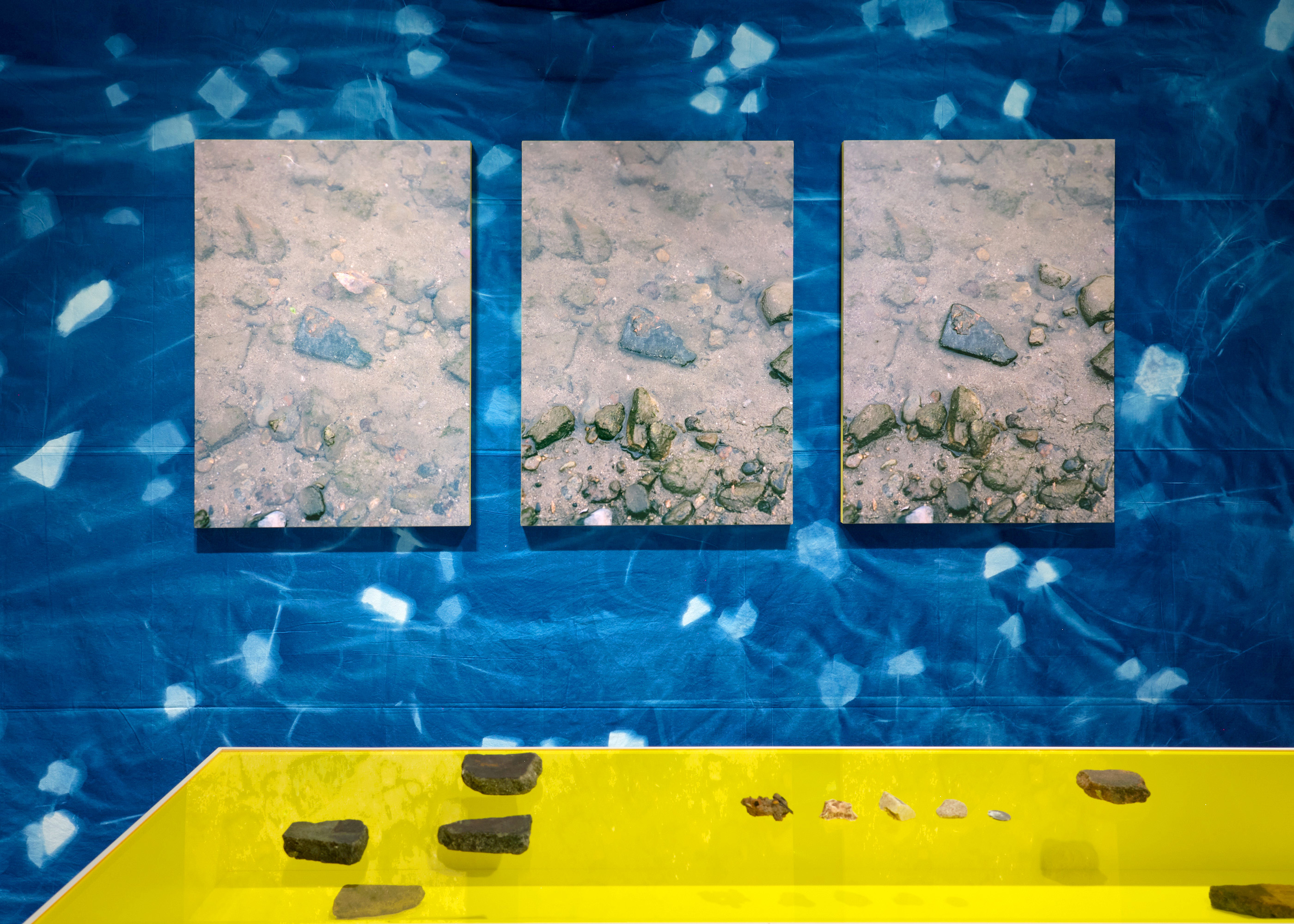
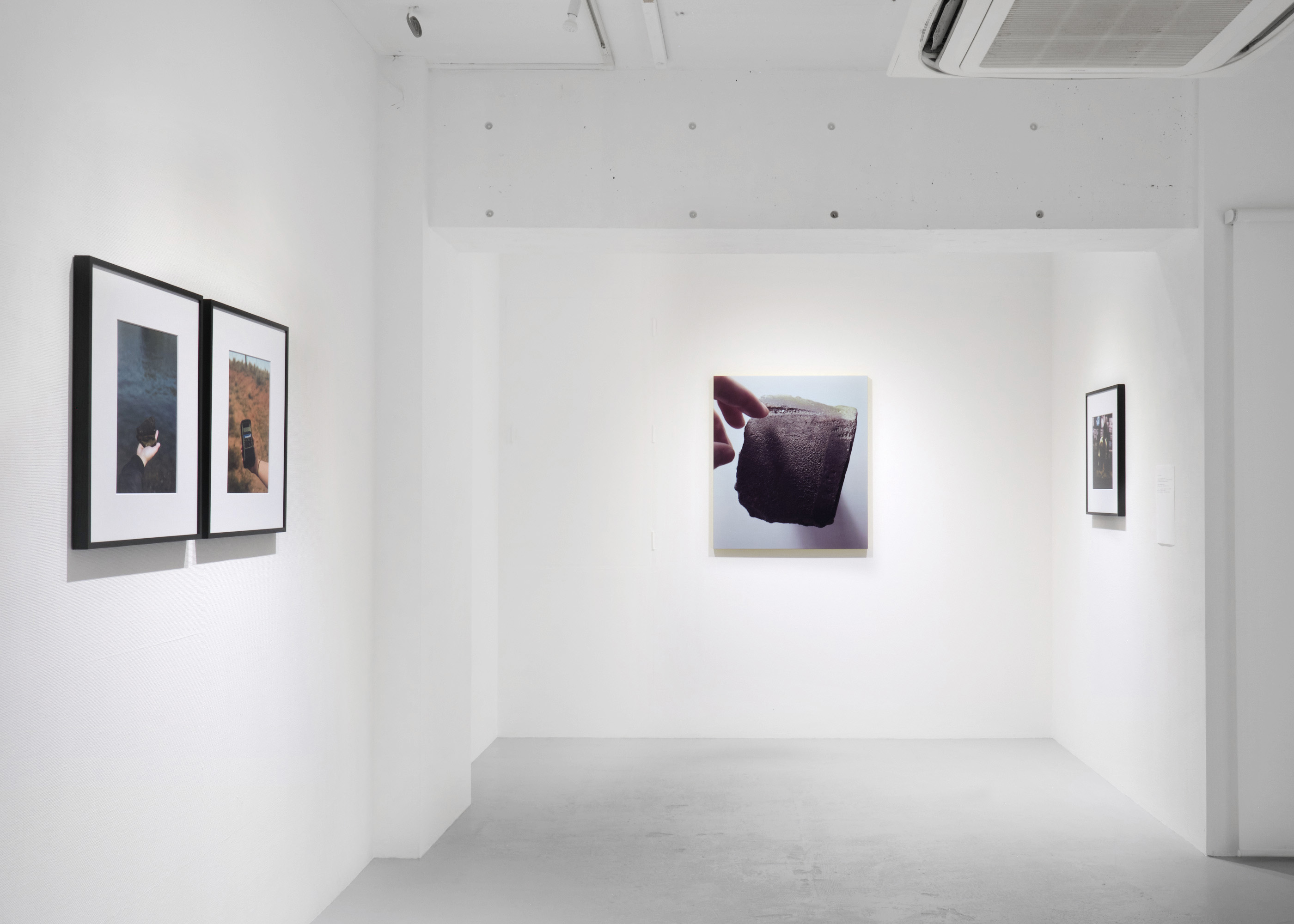
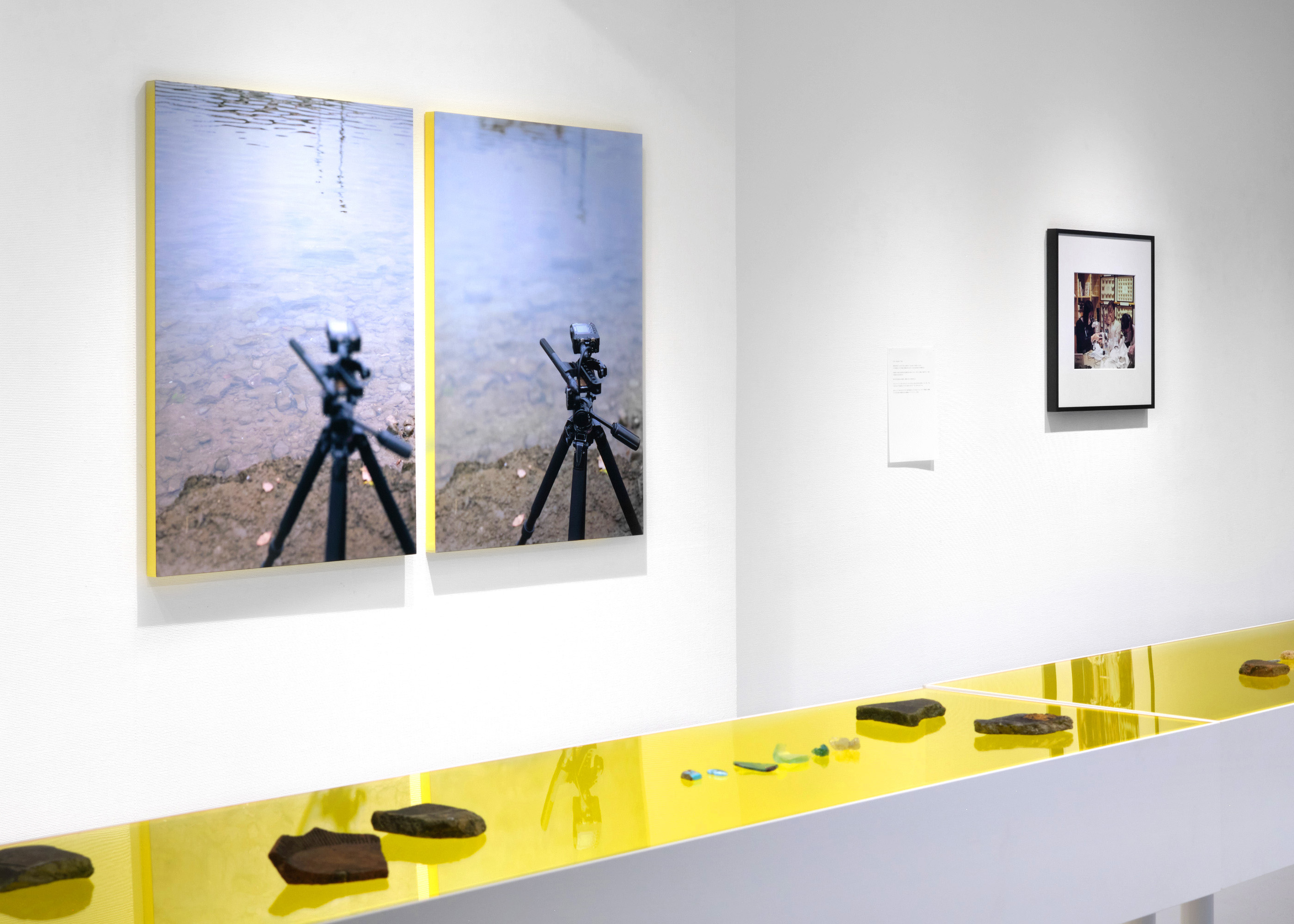
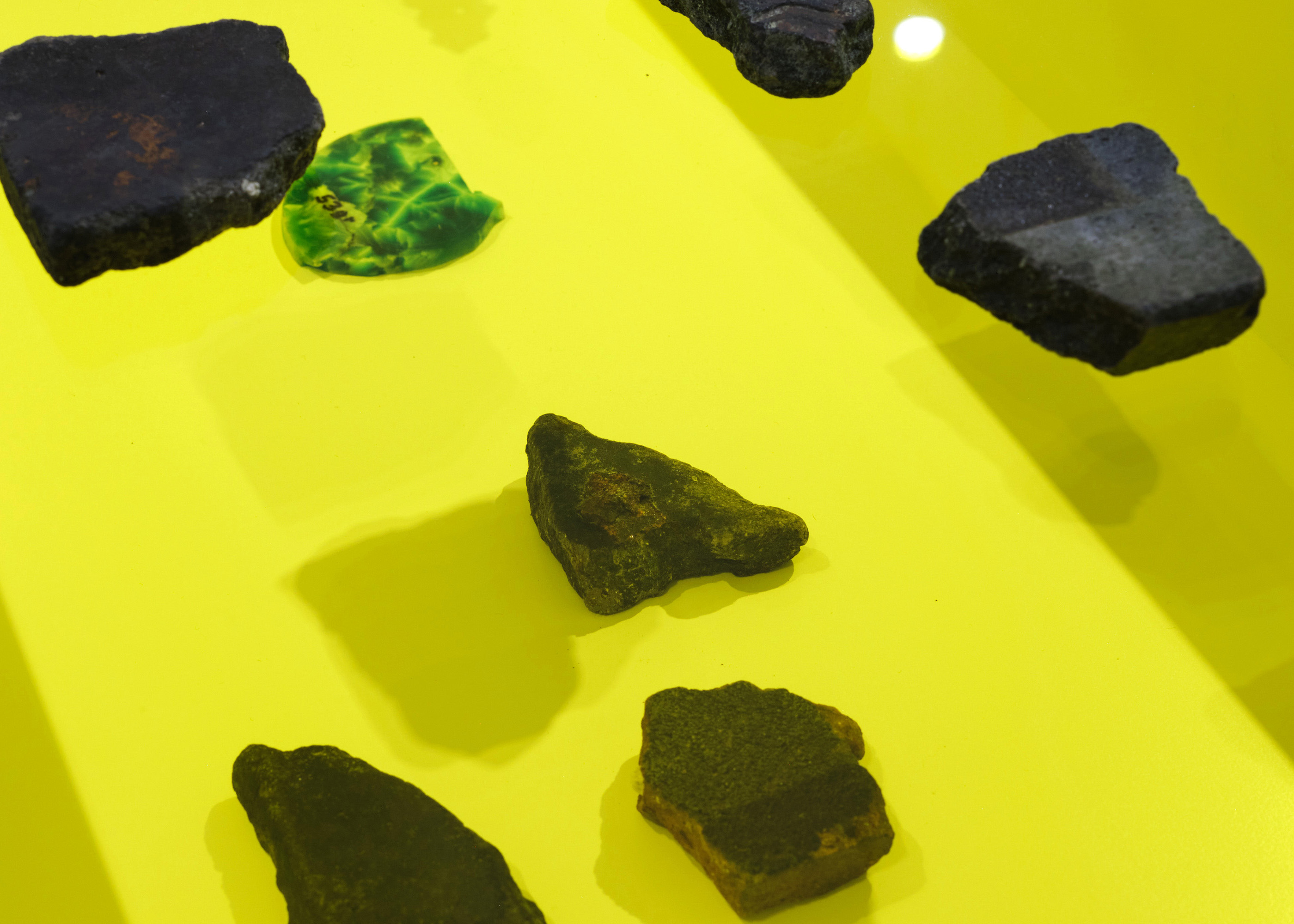
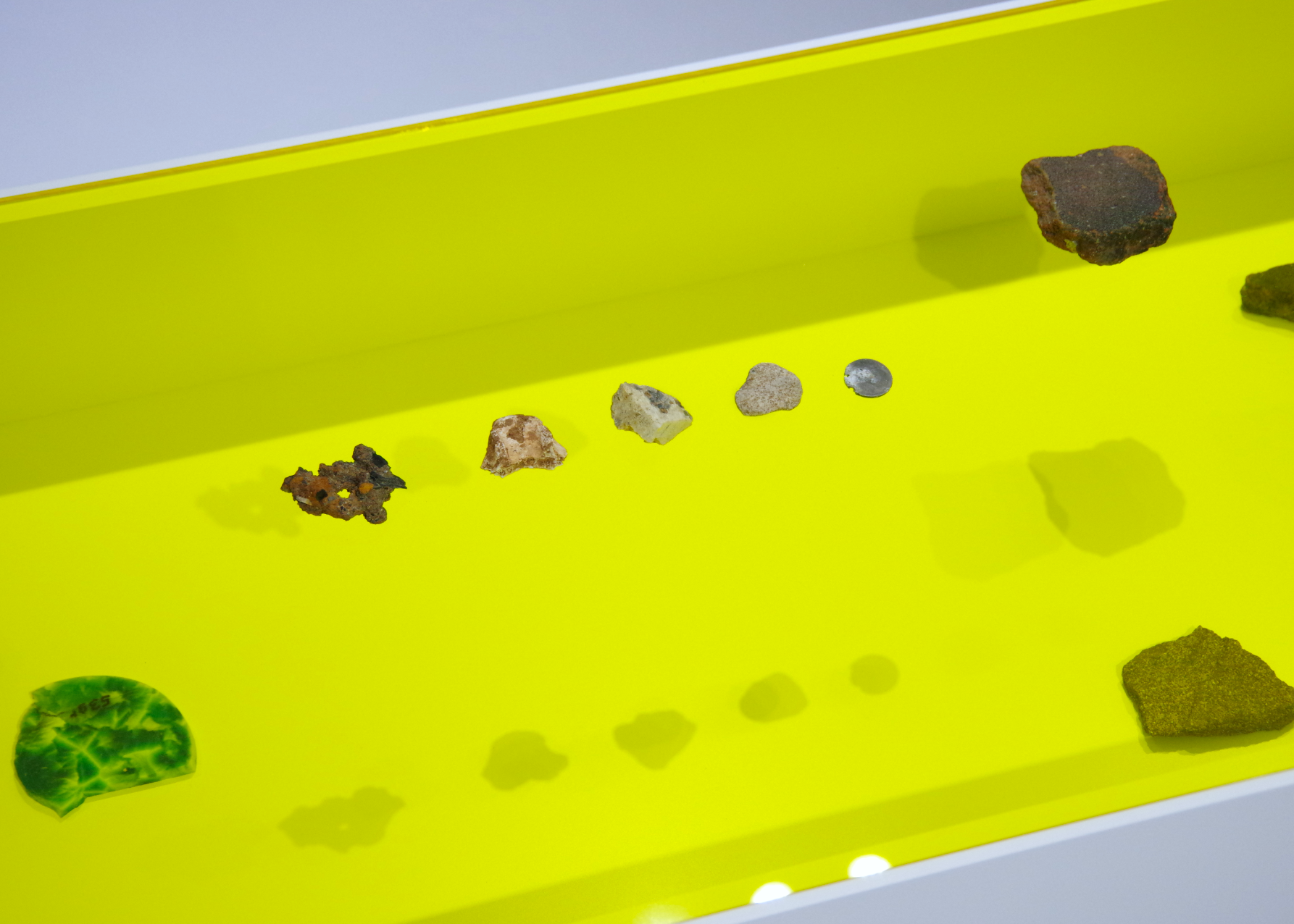
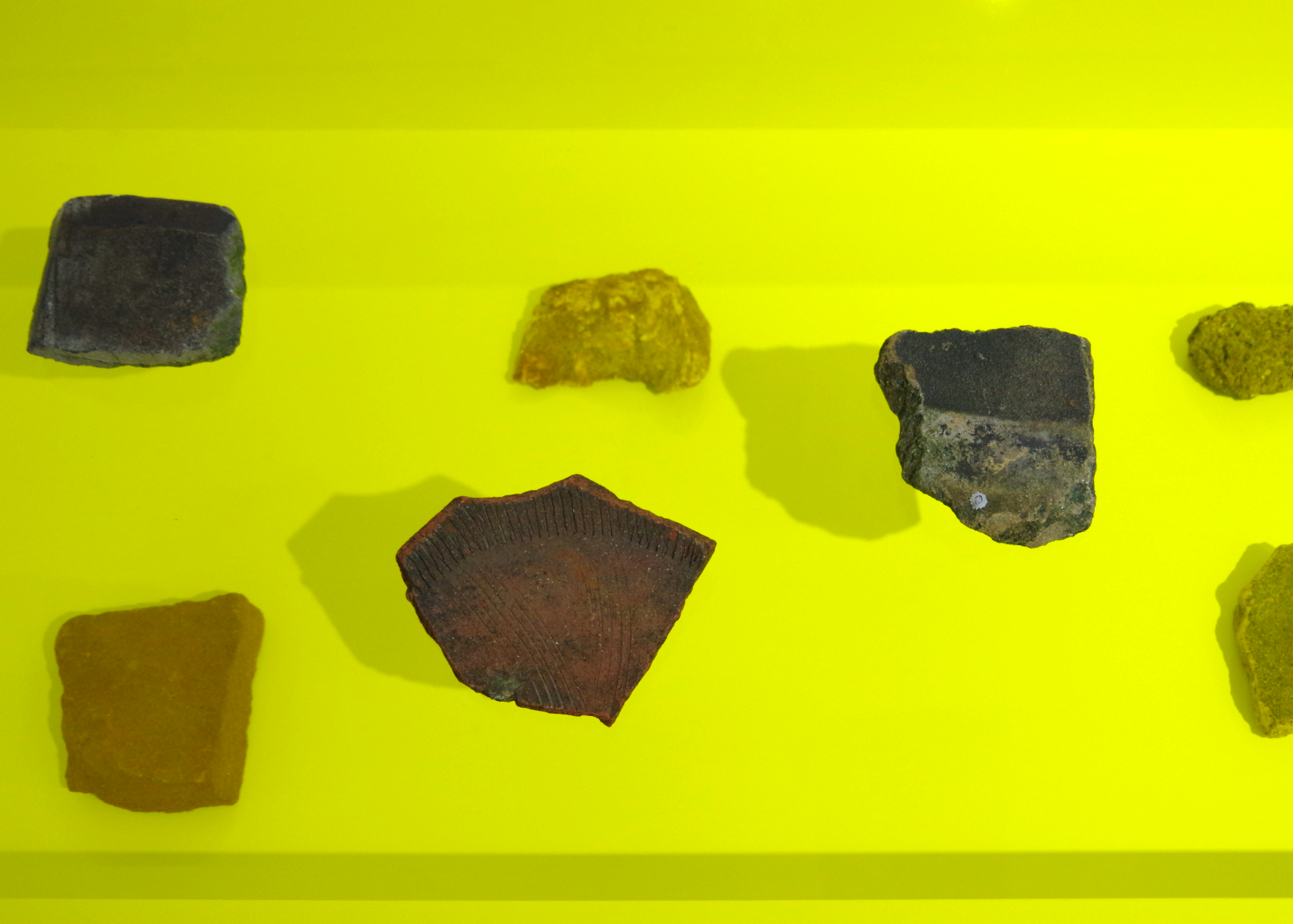
In her new work, Voices Left Behind, Kikuta takes as her motif atomic bomb roof tiles from Hiroshima, which were donated several years ago by Hiroshima University to Princeton University. These tiles were recovered from the bed of the Motoyasu River, which flows near the hypocenter of the atomic bombing in Hiroshima. Through the work, she seeks to listen to the memories retained by objects, as well as to the voices that have been buried and forgotten within the history of nuclear weapons.
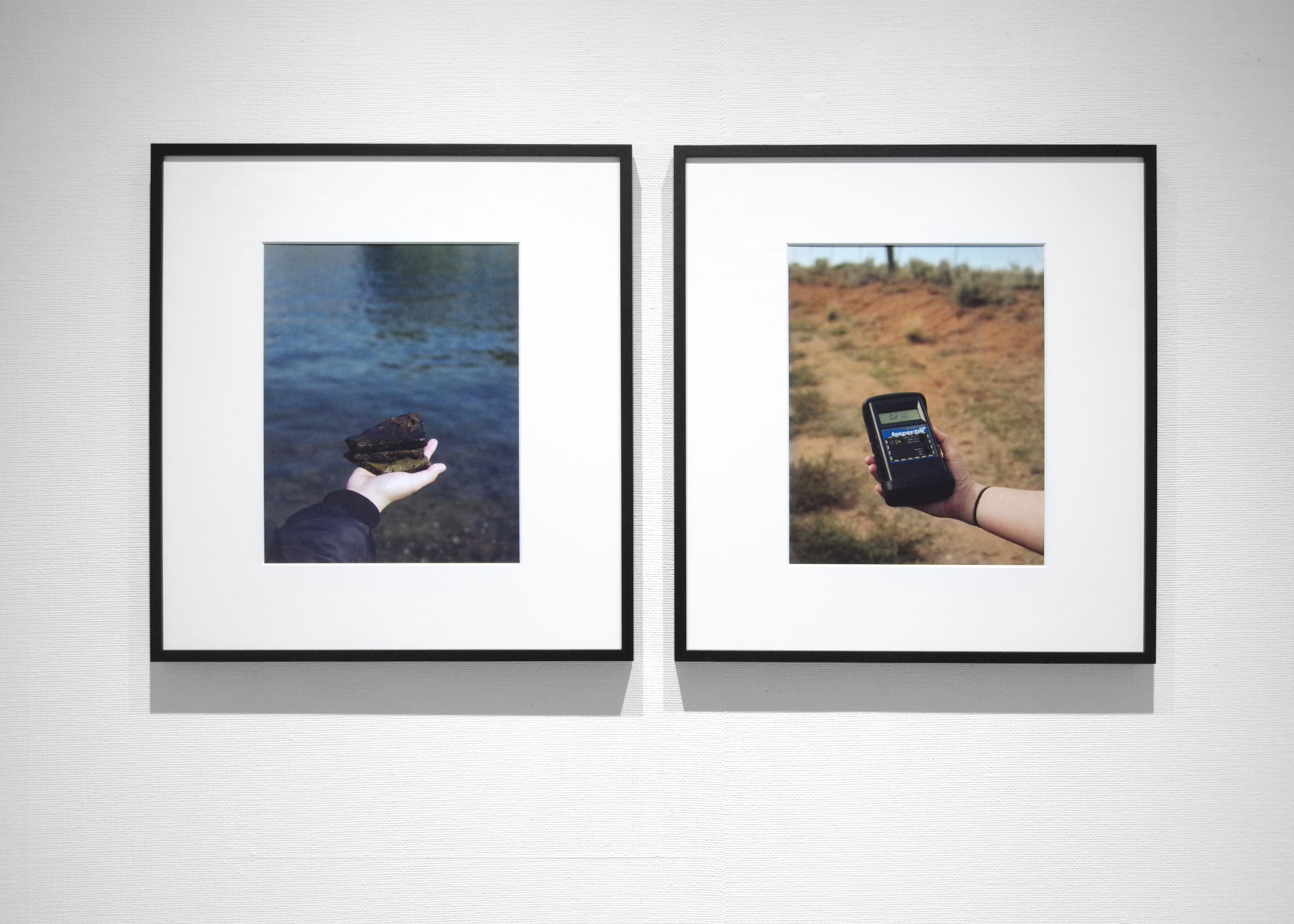
Kikuta was involved in planning and organizing part of an exchange program between volunteer students from Hiroshima University and students from Princeton University, which began in 2024 under the guidance of Assistant Professor Ryo Morimoto at Princeton University. Princeton, of course, has deep historical ties to the Manhattan Project, which was responsible for the development of the atomic bomb. Through this exchange, Kikuta learned that some of the Princeton participants have Indigenous North American roots. Their communities have a history of being drawn into the development of the atomic bomb through uranium mining and of suffering severe consequences from radiation exposure.
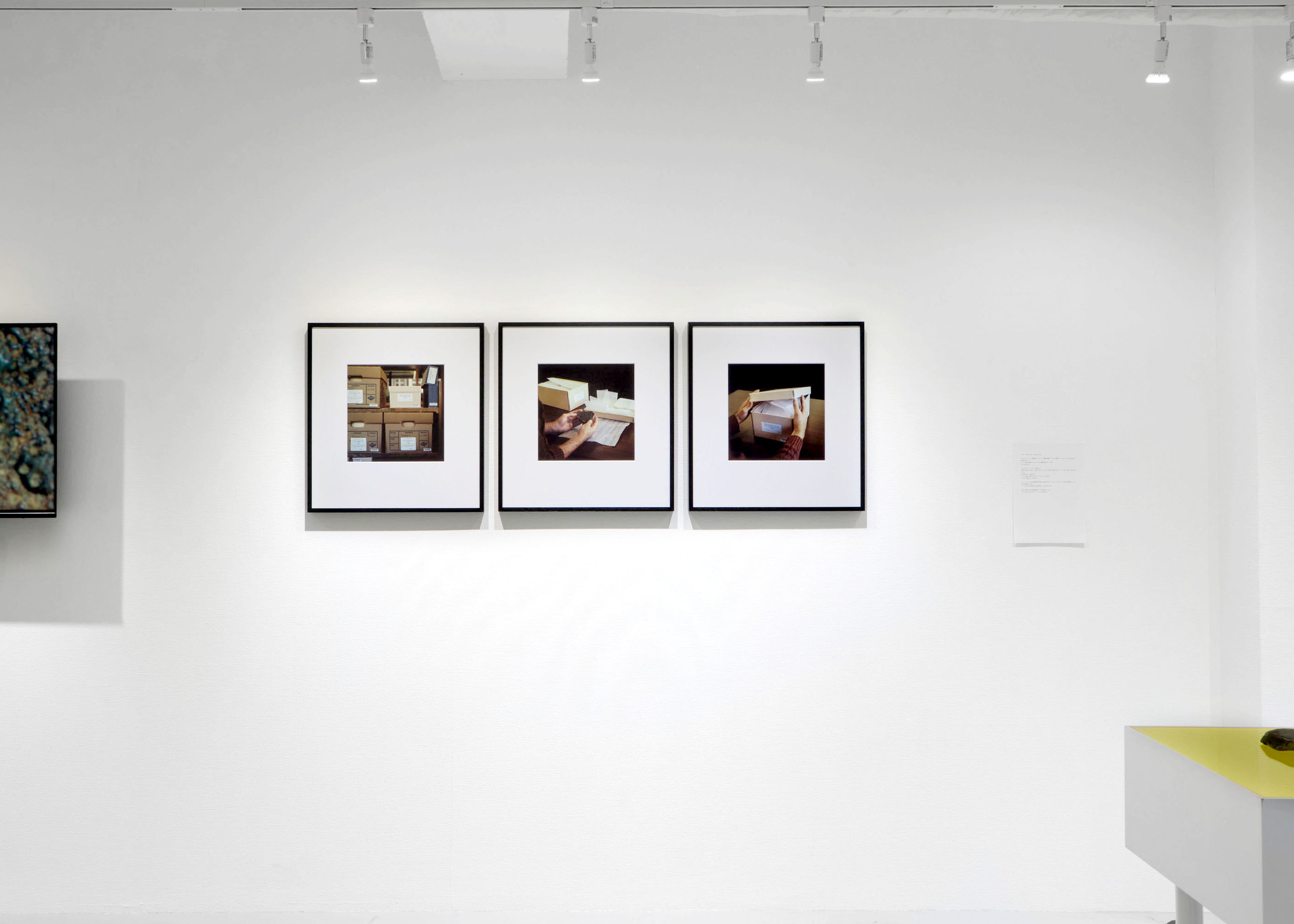
Thus, beginning with the atomic bomb roof tiles, Kikuta traces multiple and intersecting memories that extend beyond the simple binary of perpetrator and victim. In doing so, the work reflects on the politics inherent in archives themselves: what is preserved, and what is left to be forgotten.
The reason for dwelling on the past is by no means nostalgia. Rather, it is because she sees the past as an opportunity to bring new events into being in the future. The atomic bomb roof tiles that serve as the starting point for this work, as well as the work itself, will continue to be newly interpreted in the future, and their meanings will continue to change. For this reason, turning our gaze toward the past and continuing to tell its stories will remain an ongoing, never-ending endeavor.
Hirohisa Koike, Curator
---
Mana Kikuta’s exhibit, Voices Left Behind, brings to my mind the first line of one of the most famous poems—perhaps the best known poem—in China’s long history. Titled Spring Prospect(春望), it was written by Du Fu in 757 CE while he was held captive in the capital city of Chang'an after it fell to rebel forces during the An Lushan Rebellion, in the middle years of the Tang dynasty. As translated by Burton Watson, it reads “The nation shattered, mountains and river remain.” Steven Owen renders its politics more directly, and to my mind with greater force: “The state broken, its mountains and rivers remain.” In Owen’s translation of the rest of the line, “the city turns spring, deep with plants and trees,” he beautifully captures the desolation of the capital, overrun with vegetation.
Hiroshima was not Japan’s capital, but it was certainly a major city, home to important military facilities and factories producing weapons of war. In the aftermath of the most powerful human-produced explosion in history, both the Japanese state and the nation were surely broken. Among the remnants of the blast, roof tiles were deposited in the MotoyasuRiver running through the center of the ruined city, originally fashioned from clay dug from rice fields or hillsides, still resting in the water decades later. And in Hiroshima, as in Chang’an, flowers bloomed by the following spring, even as the city remained largely in ruins.
There have been many valuable cultural projects to carry forward the memory of this tragedy, in poetry and prose, in paintings and film and manga. What Kikuta has done is capture in photographs and in video, and in boxes, the visual record and the material remnants themselves. In essence, the remains of mountains, now in rivers. For the students from Princeton, Hiroshima, and more recently Harvard, these remnants prompted a valuable exploration of the history connecting the scientists in the Manhattan project, native Americans whose lands were tainted by the atomic bomb tests, and the citizens of Hiroshima. For me, and I believe for others who visit the exhibit and view or touch these objects, there is a strange power to these tactile prompts to memory.
Andrew Gordon, Harvard University
---
The Other Side of Hiroshima
In the summer of 2020, when the COVID-19 pandemic had spread throughout the world, I came across a local newspaper from Princeton, New Jersey, dated August 10, 1945. As a Japanese anthropologist educated in the United States who studies nuclear issues, I found the headline’s triumphal tone shocking: “Princeton Aids with Atomic Bomb.”
Growing up in Japan, particularly in Kurashiki City, Okayama Prefecture, I was naturally exposed to the victims’ perspective and learned about the inhuman consequences of the atomic bombs from school texts, museum visits, and oral histories. After moving to the U.S., I knew there were different perspectives on the bomb, but not until I took up a teaching position at Princeton—where much critical, top-secret research on the development of the atomic bombs was conducted—did I fully grasp the reality and historical and cultural weight of “the other side of Hiroshima.”
Around the same time, I met a group of Native American students at Princeton who were struggling to be heard as a minority. We collaborated to explore the shared history of the U.S. nuclear nation-building project, which simultaneously altered Japan’s fate and victimized already dispossessed Native American communities across the United States, damaging their stolen lands and ongoing lives. Our collaboration led to the discovery not only of the fragmented divisions of harm and experience among diverse groups of people but also of the power of weaving unarticulated, surprising connections that nuclear things can forge by virtue of their omnipresence. The result of our collaboration was the launch of the Nuclear Princeton project, which aims to reveal the invisible ties among differently situated actors.
After excavating overlooked nuclear histories and experiences in the U.S., the project sought to reach out to people in Hiroshima. We called this initiative Chain Reactions—a term in nuclear technology describing a self-sustaining, self-amplifying process for generating energy, whether to produce electricity or to create a bomb. With this central concept, our goal was not simply to create another memory or narrative of the atomic bombing, its ongoing consequences, or related labors and sacrifices, but to prompt new (re)actions that would lead others to participate in the continuation of the atomic bombing’s history. In this sense, we considered Nuclear Princeton the trigger for a series of subsequent actions. We selected Mana Kikuta as a catalyst whose actions and reactions would draw others into this process. (I thank Misaki Katayama, a third-generation hibakusha and graduate student at the University of Tokyo, who helped find Mana).
When I first met Mana, I remember her resistance to building an art project around a concept fundamental to the mechanism of an atomic bomb. Unlike me, who had been exposed to perspectives from the other side of Hiroshima, as a third-generation Hibakusha, Mana found the voices left behind in Hiroshima too real and palpable to reduce to technical metaphors. Indeed, my original request was challenging for her: I wanted her to use origami to express traces of memory and history through the juxtaposition of two iconic symbols of Japan and the United States—the crane and the bomb. Using origami art, I wanted to confront the irreversible nature of the atomic bombing and its consequences not only through texts but also tactually and visually, through the physical act of folding and unfolding origami paper.
I cannot speak to Mana’s internal thoughts on this, nor do I know what she thinks of this concept now. Yet, I do know that she used her artistic sensibility to experience the other side of Hiroshima on her own. She traveled across North America and Japan, seeking out the indestructible fragments of memory, hearing the inaudible, and seeing the invisible connections that even the destructive power of the bomb has failed to sever completely.
To me, Voices Left Behind is Mana’s personal and artistic response to my response to the American response to the atomic bombing of Hiroshima in the summer of 1945. In a world where the number of surviving Hibakusha is diminishing, Mana uses her artworks to explore ways to prompt reactions from all of us—forcing us to ask what we each need to do to pass down the voices that have been, and are about to be, left behind. These voices can no longer be held only by those who experienced the destructive heat of the artificially produced sun in 1945; we can no longer delegate the task only to the survivors and their families. Instead, each of us needs to grapple with the irreversible historical fact that the bombs were dropped and still exist, posing the possibility of the extinction of humanity. Atomic bombs are our collective affliction—a symbolic and real hindrance to our ability to actualize global peace.
In Native American cultures, a ceremony is often needed to help one recover from maladies. To me, Voices Left Behind is such a ceremony—one Mana prepared for all of us to metaphorically undo the bomb and fold it again to create a crane. While we cannot disavow the past, we are endowed with the power to act in the present and change the future.
It is my hope that Voices Left Behind will trigger a chain reaction that makes passing on the voices of Hiroshima a self-sustaining and self-amplifying act.
Ryo Morimoto, Harvard University
Lire plus
Kanzan Gallery
Family photo
- photograph
2024
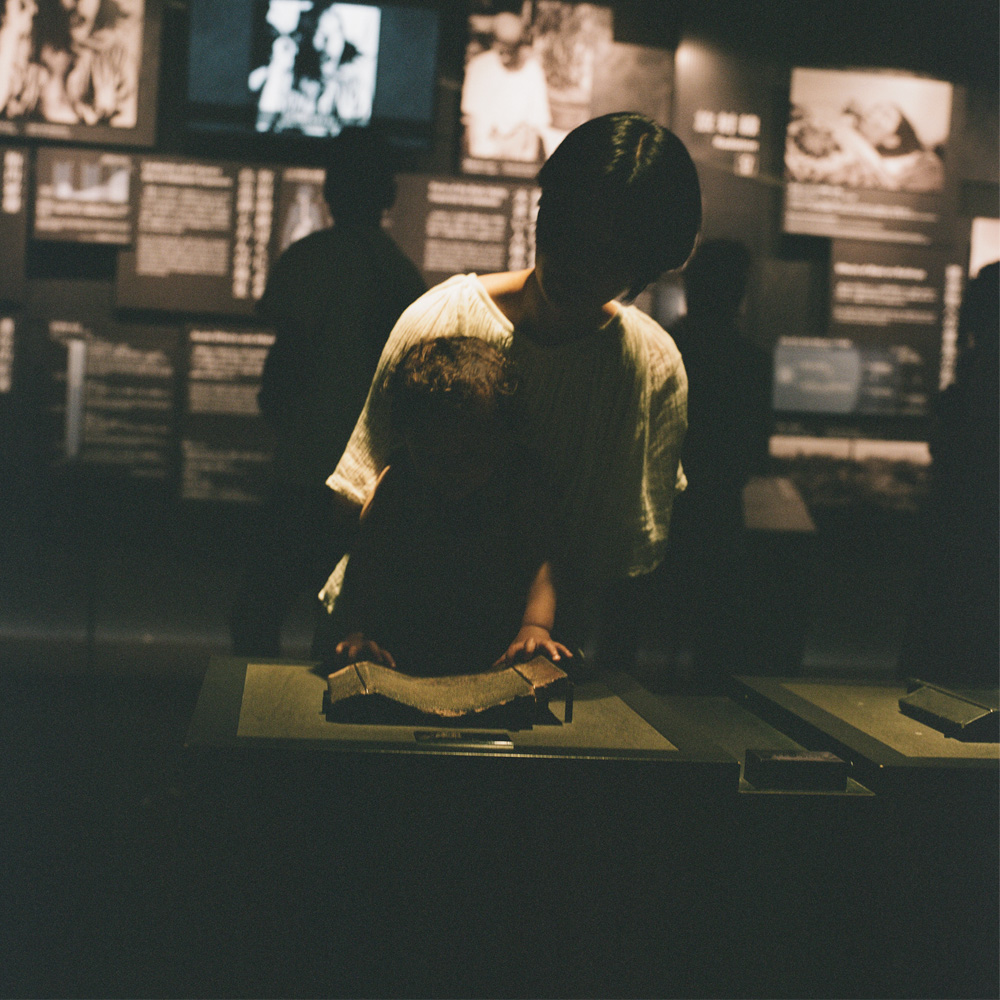
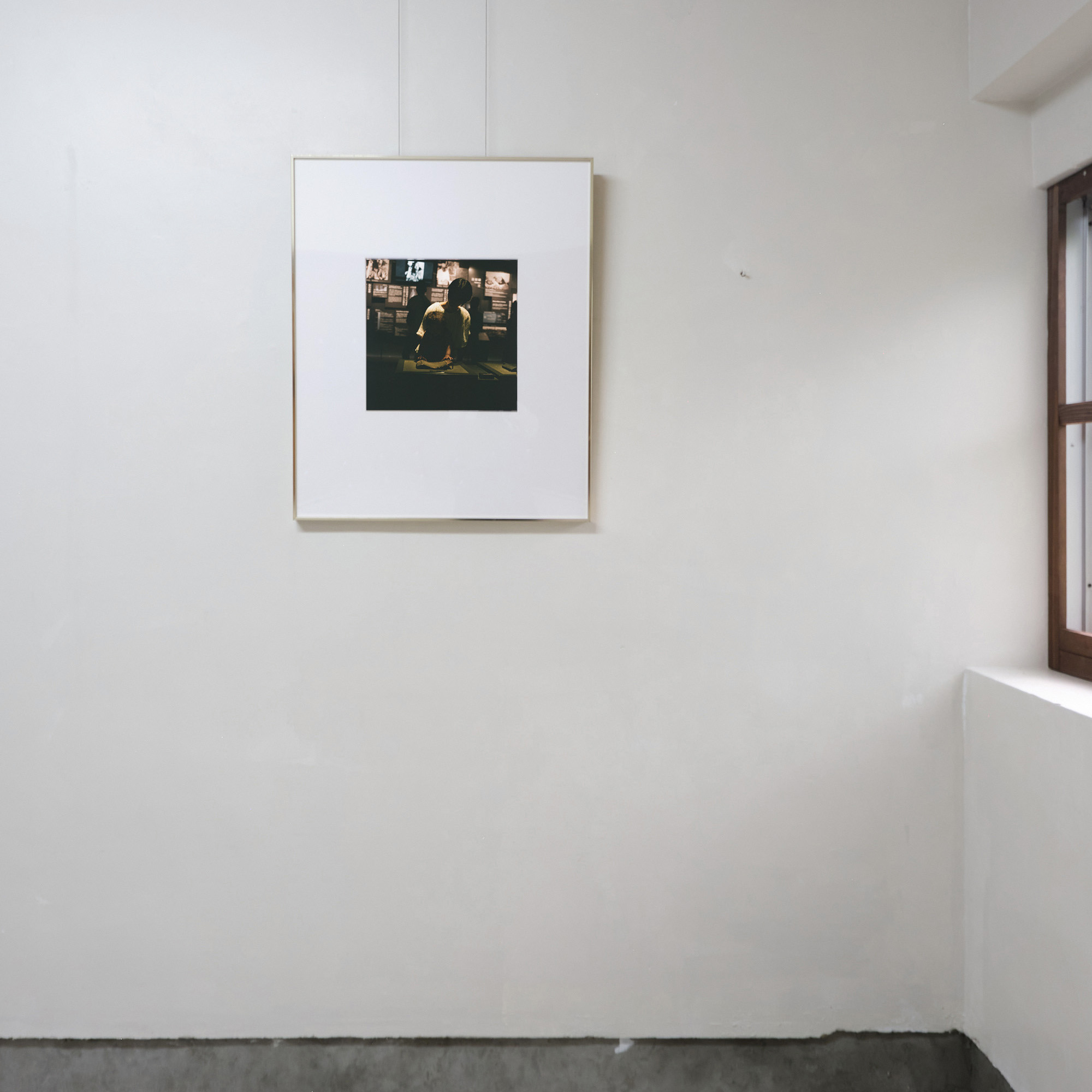
Family Portrait by Kikuta is a portrait of Kikuta with her child. After spending more than ten years in France, Kikuta returned to Japan last month and established her base in Hiroshima, her hometown. Created after her return, this first work was photographed at the Hiroshima Peace Memorial Museum and takes the form of a mother-and-child portrait. Kikuta’s child, who touches an atomic bomb-damaged roof tile on display at the museum, is a fourth-generation descendant of atomic bomb victims.
Text: Nodoka Odawara
Lire plus
Archives Mikiyo Kanō Sagori